
Aqueous self-dispersed inkjet colourants start with an insoluble pigment particle. When the particle surface carries suitable hydrophilic groups, it can disperse in water without relying on a separately added dispersant to keep the particles apart. The pigment remains a solid. The starting powder, the modified dispersion and the finished ink each have their own specifications.
Carboxylic and phosphate surface chemistry
Surface modification attaches water-compatible groups to pigment particles. Ionised surface groups can give the particles a charge that helps keep them apart. The degree of ionisation and dispersion stability depend on the surface chemistry and the surrounding liquid. Evaluate the colourant at the pH and electrolyte levels it will encounter in the intended ink, including after dilution and addition of the binder and humectants.
- Carboxylic functionality. Carboxylic acid groups can ionise to carboxylate groups. Check whether the dispersion remains stable across the formulation’s working pH and when it encounters salts or other ink ingredients.
- Phosphate functionality. Phosphate-bearing surfaces give formulators another route to charge and water compatibility. Phosphate and phosphonate refer to different groups. Compare the actual dispersion grades with the intended vehicle, pretreatment and substrate rather than ranking the two platforms by name.
Huabao laboratory results for carboxylic grafting
Huabao evaluates three properties together when selecting pigments for aqueous self-dispersion. High colour saturation helps the formulator reach the target chroma. A consistent crystal form helps maintain shade from lot to lot. A strong grafting response gives the dispersion developer a way to introduce hydrophilic groups at the pigment surface.
The PV19 and PR122 dispersions showed strong stability in these laboratory evaluations. Compare grafting rates obtained by the same method, then confirm storage stability and jetting in the intended ink vehicle and binder system.
- R-type PV19. Huabao reports a carboxylic grafting rate of up to 90% in laboratory trials.
- PR122. Huabao reports a carboxylic grafting rate of up to 75% in laboratory trials.
- PY180. Work to improve the grafting rate is ongoing.
Comparing dispersion routes
Ink makers can also evaluate adsorbed dispersants, polymer stabilisation and encapsulation. Start with the same pigment and target colour where practical. Compare the achievable particle-size distribution, filtration and storage stability within each route’s intended vehicle. Then test jetting, fixation and durability on the end substrate.
Customer case · AIC water-based self-dispersed colourants
AIC, the inkjet colourant brand of Hangzhou Iris Chemical Technology Co., Ltd., is a downstream Huabao customer. AIC uses Huabao organic pigment powders as feedstock for water-based self-dispersed pigment colourants and supplies those dispersions to ink manufacturers. Its Carboxylic Series covers development areas such as textile transfer and desktop ink. Its Phosphate Series includes options for industrial single-pass printing and packaging. AIC publishes model-level technical documents and selected particle-size reports for customers evaluating these dispersions.
AIC’s published catalogue lists PR122 and PV19 dispersion options in both series. These give formulators examples of how a Colour Index choice and a surface-treatment choice can be evaluated together. Compare the dispersion models in the intended ink vehicle and on the actual substrate.
Huabao provides the colour material. AIC develops the surface treatment and aqueous dispersion. The ink manufacturer formulates the finished ink and qualifies it on the intended printhead and substrate. That supply chain shows how Huabao pigment powders are already being used in downstream aqueous self-dispersion development.
Particle-size distributions after customer processing
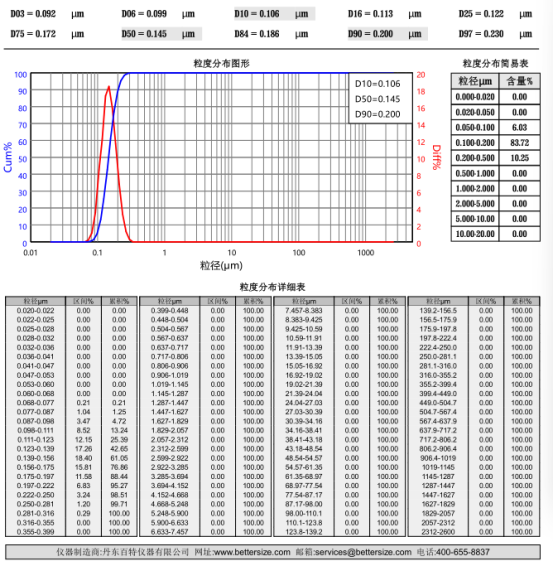
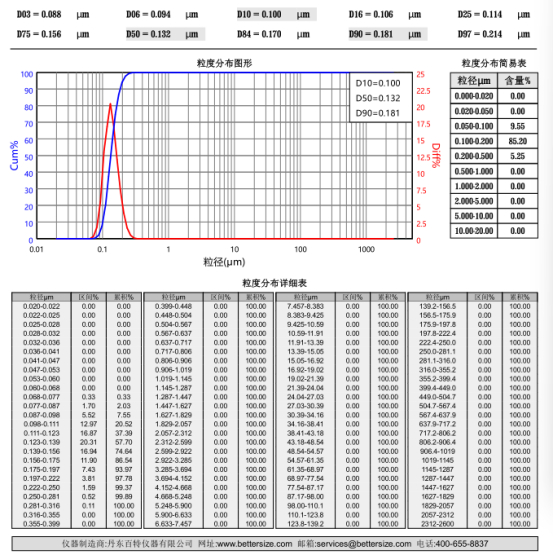
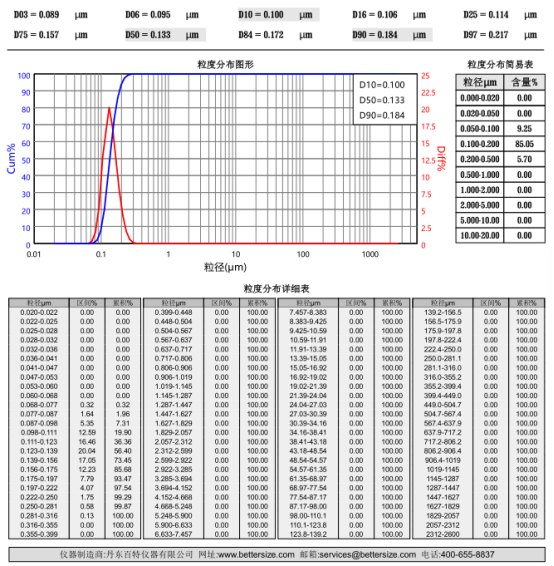
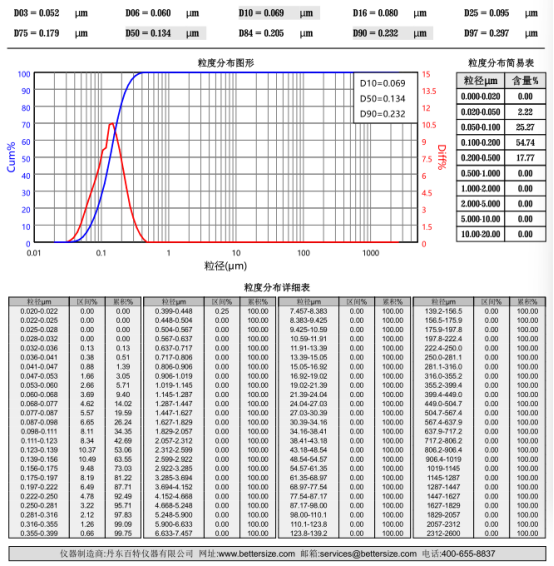
These four reports describe customer dispersion samples after carboxylic or phosphate grafting and particle-size control. The table records the reported percentiles in nanometres. D50 is the median, while D90 and D97 describe the upper part of the measured distribution.
The two PR122 samples have D50 values of 132 and 133 nm, with similarly close D90 and D97 values. The phosphate-treated PV19 sample has a lower D50 than the carboxylic sample, alongside higher D90 and D97 values. This is a reason to read the upper percentiles alongside the median. Treat the values as results for these samples and use matched repeat trials to compare treatments.
| Pigment and treatment | D10 | D50 | D90 | D97 |
|---|---|---|---|---|
| PV19Carboxylic | 106 | 145 | 200 | 230 |
| PR122Carboxylic | 100 | 132 | 181 | 214 |
| PR122Phosphate | 100 | 133 | 184 | 217 |
| PV19Phosphate | 69 | 134 | 232 | 297 |
View the four particle-size reports
From pigment powder to stable jetting
- Match the incoming pigment lot. Compare shade and tinting strength against an approved reference under agreed preparation conditions. A consistent starting powder helps the formulator reproduce the colour target after surface treatment and dispersion.
- Qualify the dispersion. Record pigment concentration, pH and conductivity alongside particle-size distribution and filterability. Measure at comparable sample preparation and temperature, and repeat key checks after the agreed storage trial. A similar median size can still conceal a different coarse fraction.
- Qualify the finished ink. After adding binder, humectants and other ingredients, verify viscosity and surface tension under the intended test conditions. Check circulation, sustained jetting and restart after idle time, then assess colour and fixation on the actual substrate.
What to test for each application
- DTF, DTG and powder-free textile transfer. Compare colour and fixation using the intended film, transfer stack or fabric. Evaluate dry and wet rubbing or wash durability as relevant to the completed print. For powder-free transfer, qualify release and bonding on the complete transfer system.
- Roll-to-roll and single-pass production. Check sustained jetting and, where the press supports it, ink recirculation at production settings. Compare spread and density on corrugated board. For web-fed print-on-demand books, also verify drying and print-through on the intended text stock.
- Decor paper. Follow the pattern through resin impregnation and hot pressing. Compare shade and fine woodgrain definition on the cooled laminate.
Consistent pigment powders for precise colour
Huabao uses its laboratory and ISO 9001:2015 quality management system to support pigment development and manufacturing. Our current range is PY180 Superfast Yellow HGI, PR122 Superperm Pink EC and R-type PV19 Superfast Violet RP. For a new project, agree the target shade, reference lot, surface-treatment route and downstream tests so that powder qualification reflects how the ink will actually be made and used.
Choose a Huabao pigment powder
Check the grade data or request a sample for your formulation trial.