
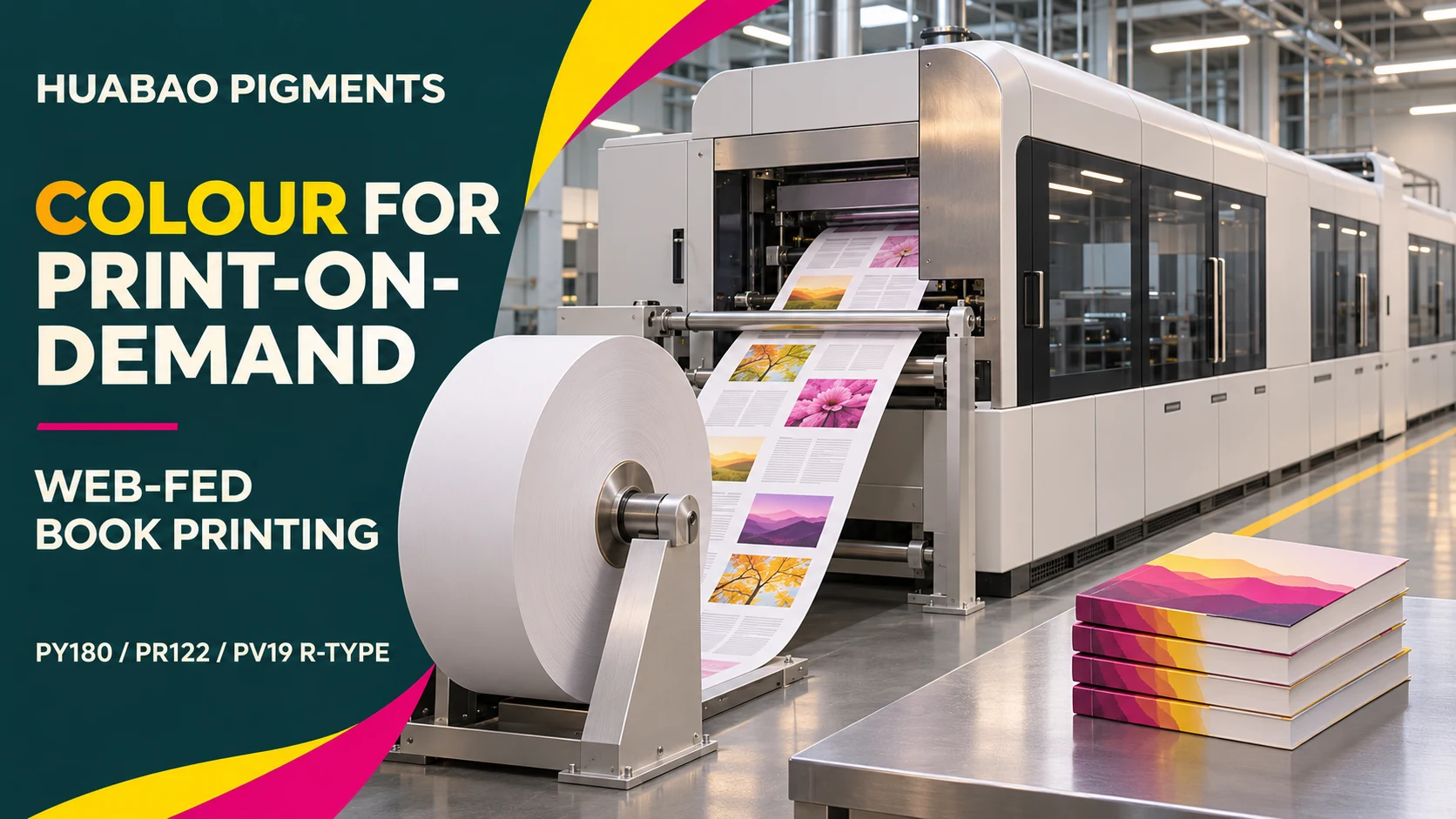
For a publisher, the uncertainty often starts before a book reaches the press. How many copies will sell this month? Will a course adoption create a rush order? Is it worth holding another pallet of a backlist title? Print on demand, or POD, lets a publisher produce copies against actual orders or replenish stock in smaller batches. A web-fed inkjet press brings that flexibility to operations that also need to meet daily production volumes.
How a web-fed POD line works
A continuous roll of paper feeds past the printheads. The digital front end prepares the imposed pages, and the press prints the job from its file. In a duplex configuration, both sides are printed and dried as the web moves through the line. The output can be rewound or sent to compatible finishing for cutting, folding or gathering. The cover may run on a separate machine, especially if it needs a heavier stock or a protective finish. HP markets PageWide web presses for publishing and bindery workflows. Canon’s ColorStream 8000 series is another documented example of a web-fed platform using water-based pigment ink for monochrome and colour book work. HP PageWide publishing presses · Canon ColorStream 8000
Book POD can also be a large-scale operation built around individually small orders. In 2017, Ingram Content Group’s Lightning Source announced an order for 24 HP PageWide T240 HD presses for its POD network. A plant can fill the day with short jobs by coordinating the order queue, press setup and bindery. HP and Lightning Source announcement
What the ink has to deliver on book paper
On a lightweight text stock, compare fine letter edges, optical density and the visibility of the image from the back of the sheet. Low paper opacity can cause show-through even when ink penetration is well controlled. On coated paper, check whether solids and overprints dry evenly and handle cleanly as pages are stacked or rewound. A primer or bonding agent can help on certain press and paper combinations. Select it together with the ink, paper and dryer settings. HP PageWide media and paper treatment options
Run a real book file, including the darkest image spread and the lightest paper you intend to use. Check colour balance, set-off, curl, rub resistance and folding behaviour after the web cools. At the ink qualification stage, compare dispersed particle-size distribution and filterability before and after storage, and confirm sustained jetting and restart after idle time. The useful measure of speed is bound books that meet the publisher’s specification per shift.
Where inkjet can take work from offset
The most promising jobs are backlist replenishment, niche editions, customised manuals and short runs that would otherwise incur repeated plate and make-ready costs. Offset can still offer a lower unit cost for a stable, long run on an established stock. Compare the two routes using the same finished book and delivery requirement, and include make-ready waste, ink coverage, paper treatment, binding, inventory and unsold copies. There is no single crossover run length.
Huabao supplies PY180, PR122 and R-type PV19 organic pigment powders for colour-ink development. For an inkjet book project, compare the powder lots and dispersions against a retained reference, then qualify the finished ink on the intended paper and press. The repeat order is the real test of whether the chosen colour can be reproduced consistently.