
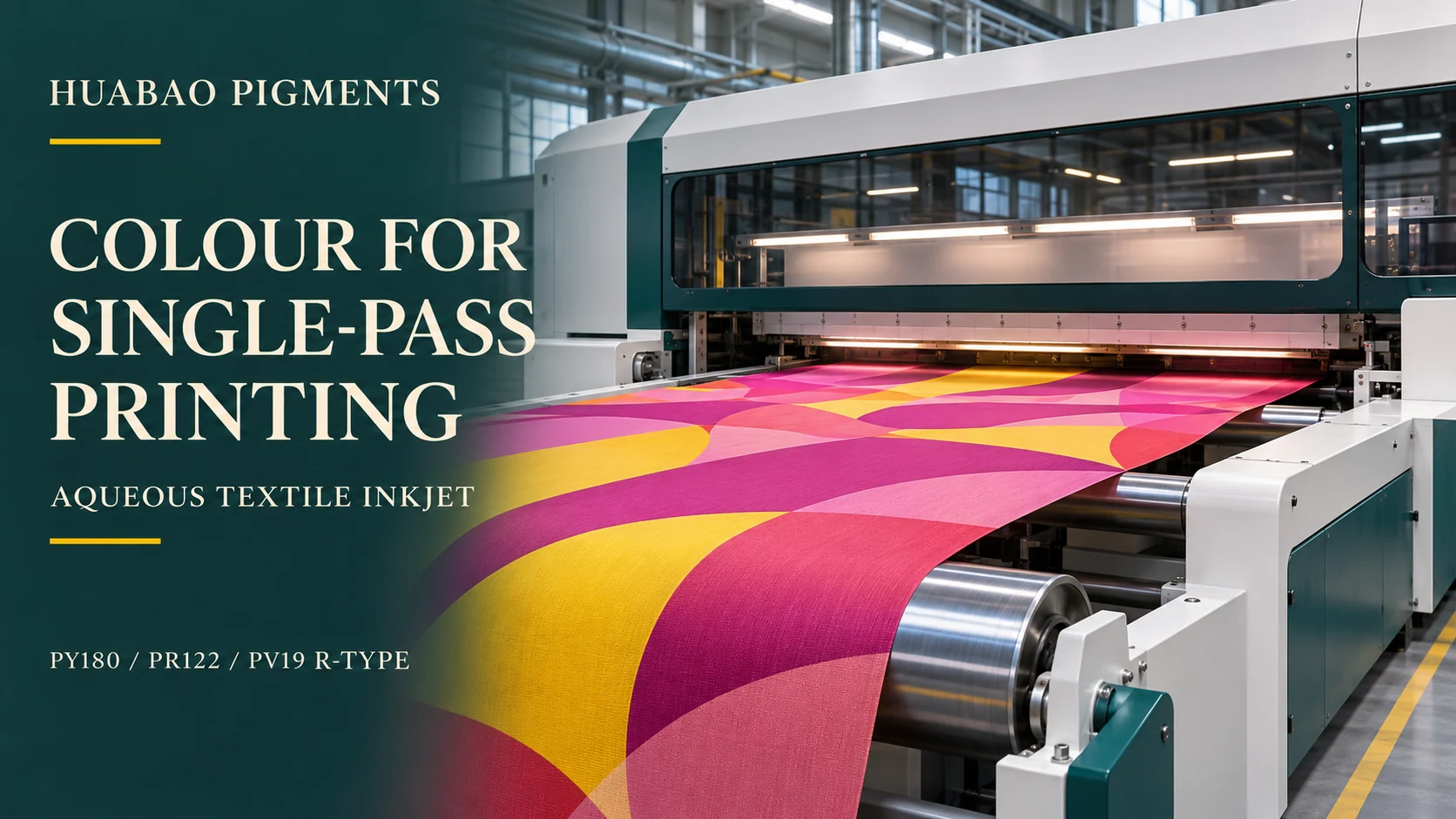
A single-pass textile printing machine has stationary print bars that span the configured print width. Fabric moves beneath them, and successive bars deposit the colours as the same area of fabric travels through the print zone once. A scanning inkjet printer moves a printhead carriage across the fabric in multiple swaths. A roll-to-roll printer can use either architecture. The first term describes how the fabric is fed and rewound, while single-pass describes how the image is formed.
What happens as fabric moves through the line
The infeed guides the fabric, and a controlled transport system keeps it steady as the image is printed. Staggered or overlapping printheads within a bar cover the fabric width. The press has to align the overlap across each bar, register the colours to one another and synchronise firing with fabric movement. The printed fabric then moves to drying and any fixation or finishing required for the chosen ink and fibre. EFI’s Reggiani BOLT XS brochure shows these subsystems in an industrial single-pass line, including the conveyor, print beams, dryer, ink delivery and missing-nozzle compensation. MS Printing Solutions also documents its LaRIO as a single-pass textile platform with different width and printhead configurations. EFI Reggiani BOLT XS brochure · MS LaRIO specifications
Why pigment ink needs to be qualified for the line
The print architecture can work with different ink chemistries, depending on the equipment and fabric. In a water-based pigment workflow, a binder helps fix the colour to the textile. Pretreatment, drying or curing conditions, and binder choice affect shade, fabric feel, wash durability and dry and wet rubbing. Check the actual fabric lot and how the line fixes the ink. OEM pigment ink systems illustrate the importance of matching binder technology with the equipment’s fixation stage. EFI Reggiani TERRA pigment ink
A missing nozzle or an incorrectly aligned overlap can repeat along the entire roll. An ink trial should therefore include a sustained production run, a stop-and-restart sequence, and cross-web checks for banding and shade uniformity. Inspect the cured fabric for colour, fine detail, hand feel, rubbing and wash performance. Record how much printed material passes inspection at the required settings. A machine’s maximum speed may be measured under a different print mode from the one the customer needs.
When the investment makes sense
Single-pass is attractive when a mill has enough work to keep a full-width line occupied and needs frequent artwork changes without making rotary screens. Scanning printers remain useful for sampling, specialised materials and some short runs. Compare cost per accepted metre, including pretreatment, ink, drying, maintenance and rejected fabric. Huabao’s role is to supply consistent pigment powders for dispersion and ink development. The combination of powder lot, ink and machine is qualified against the mill’s finished fabric.